
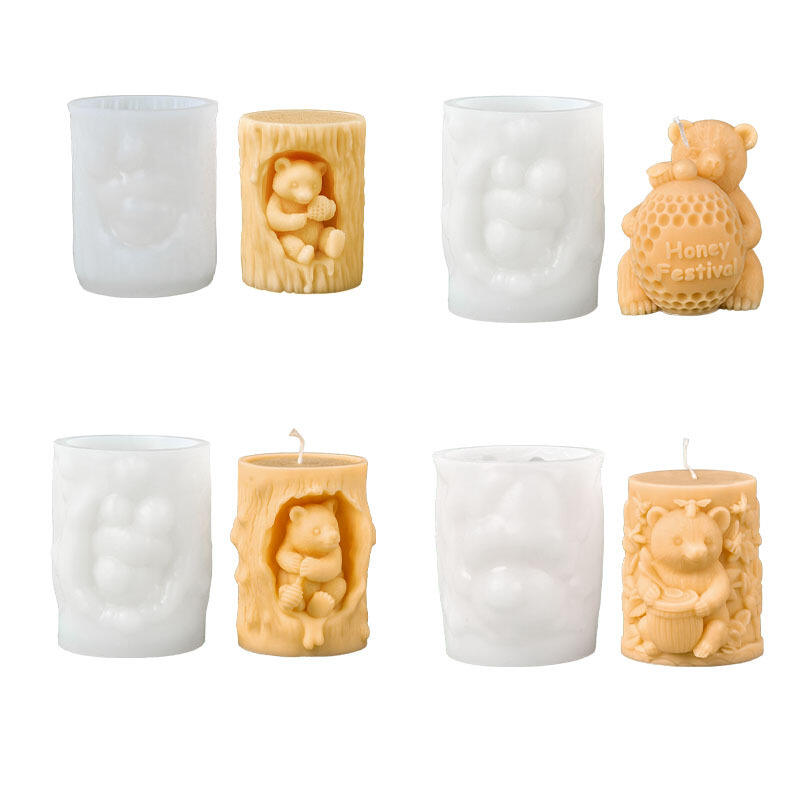
Manufacturing consistent candles in bulk quantities requires precision, reliability, and materials that can withstand repeated use without degrading. Professional candle makers and manufacturers have increasingly turned to advanced molding solutions that deliver uniform results across thousands of production cycles. The key to achieving this consistency lies in understanding how modern flexible molding materials maintain their structural integrity while providing smooth release properties that prevent defects and ensure every candle meets quality standards.
The candle manufacturing industry has evolved significantly over the past decade, with producers demanding higher efficiency and more predictable outcomes. Traditional molding methods often resulted in inconsistent shapes, surface imperfections, and variable dimensions that created quality control challenges. Modern production facilities require molding solutions that can maintain precise specifications across extended manufacturing runs while minimizing waste and reducing production downtime.
Bulk candle production presents unique challenges that differ significantly from small-batch artisan manufacturing. High-volume operations must consider factors such as thermal cycling, repeated demolding stress, material fatigue, and the need for rapid production turnaround. Successfully addressing these challenges requires molding materials that exhibit exceptional durability, dimensional stability, and consistent performance characteristics throughout their operational lifespan.

Material Properties That Enable Consistent Results
Thermal Stability and Heat Resistance
Effective bulk candle production relies heavily on molding materials that can withstand repeated exposure to molten wax without experiencing dimensional changes or surface degradation. High-grade molding compounds maintain their structural integrity across temperature ranges from ambient conditions to the elevated temperatures required for wax pouring, typically between 140-180°F depending on the wax type being used.
The thermal expansion coefficient of quality molding materials remains minimal across these temperature ranges, ensuring that mold dimensions stay consistent throughout the heating and cooling cycles. This stability prevents the gradual dimensional drift that can occur with inferior materials, which would result in candles that vary in size and shape as production continues over time.
Superior heat distribution characteristics also contribute to more uniform cooling patterns within the mold cavity. Even heat dissipation prevents the formation of internal stresses in the cooling wax, which could otherwise lead to surface defects, cracking, or warping that would compromise the finished candle's appearance and structural integrity.
Flexibility and Demolding Properties
The demolding process represents a critical factor in maintaining consistent candle shapes during bulk production. Advanced flexible materials allow for easy removal of finished candles without requiring excessive force that could damage either the mold or the candle itself. This gentle release capability becomes increasingly important in high-volume operations where speed and efficiency are essential.
Optimal flexibility characteristics enable the mold to flex sufficiently during demolding while returning to its original shape immediately afterward. This elastic recovery ensures that each subsequent candle will be formed in a mold cavity that maintains the same precise dimensions as the first candle produced, regardless of how many cycles the mold has completed.
The surface energy properties of high-quality molding materials create a natural release mechanism that prevents wax adhesion without requiring additional release agents. This self-releasing capability eliminates the need for chemical release agents that could affect candle quality or create additional processing steps that slow production and increase costs.
Dimensional Accuracy in High-Volume Production
Precision Manufacturing Requirements
Bulk candle manufacturing demands extremely tight dimensional tolerances to ensure product consistency and packaging compatibility. Professional-grade silicone candle molds are engineered to maintain dimensional accuracy within fractions of a millimeter, even after thousands of production cycles. This precision level is essential for automated packaging systems and quality control processes that rely on consistent product dimensions.
The manufacturing process for premium molding materials involves precision tooling and controlled curing conditions that establish the exact dimensional specifications required for each application. Advanced quality control systems monitor critical dimensions throughout the manufacturing process to ensure that every mold meets the strict tolerances demanded by high-volume candle production operations.
Dimensional stability testing protocols verify that molds maintain their accuracy over extended use periods. These tests simulate the thermal and mechanical stresses encountered during actual production to predict long-term performance and identify any potential degradation patterns that could affect product consistency over time.
Surface Quality and Detail Reproduction
Consistent surface quality represents another crucial aspect of bulk candle production that depends heavily on mold performance characteristics. High-quality molding materials capture and reproduce fine surface details with exceptional fidelity, ensuring that decorative patterns, textures, and brand markings appear identically on every candle produced.
The surface smoothness of premium molds directly translates to the surface quality of the finished candles. Smooth, non-porous surfaces prevent wax from penetrating into microscopic surface irregularities that could create texture variations or make demolding more difficult. This surface integrity remains consistent throughout the mold's operational life, preventing the gradual surface degradation that could affect candle quality in later production runs.
Advanced molding materials also resist the accumulation of wax residues and other contaminants that could gradually alter surface characteristics. Easy cleaning properties ensure that molds can be maintained in optimal condition throughout their service life, contributing to consistent product quality and extended mold longevity.
Quality Control and Production Efficiency
Automated Production Integration
Modern bulk candle manufacturing increasingly relies on automated production systems that demand consistent mold performance to maintain efficiency and quality standards. Silicone candle molds designed for high-volume applications integrate seamlessly with automated handling systems, conveyor mechanisms, and robotic demolding equipment without compromising their dimensional accuracy or surface quality.
The predictable performance characteristics of premium molding materials enable manufacturers to optimize their automated systems for maximum throughput while maintaining quality standards. Consistent cycle times, reliable demolding performance, and uniform thermal characteristics allow production managers to establish precise timing protocols that maximize equipment utilization and minimize production bottlenecks.
Integration with quality control systems becomes more effective when mold performance remains consistent over time. Automated inspection systems can establish baseline measurements and detect variations more accurately when the molding process itself introduces minimal variability into the production equation.
Cost Effectiveness in Large Scale Operations
The economic benefits of using high-performance silicone candle molds become particularly evident in large-scale manufacturing operations where small improvements in efficiency or quality can translate to significant cost savings. Extended mold life reduces replacement costs and minimizes production interruptions required for mold changeovers.
Reduced waste rates represent another important economic advantage of consistent mold performance. When molds produce uniform, high-quality candles reliably, the percentage of products requiring rework or disposal decreases significantly, improving overall production yield and reducing material costs.
Lower maintenance requirements and reduced need for quality control interventions further contribute to cost effectiveness. Molds that perform consistently require less monitoring and adjustment, allowing production staff to focus on other value-added activities while maintaining confidence in product quality.
Industry Applications and Use Cases
Commercial Candle Manufacturing
Large-scale commercial candle manufacturers utilize advanced silicone candle molds across diverse product categories, from basic utility candles to complex decorative designs. These operations typically produce thousands of candles daily, requiring molding solutions that can maintain performance standards under intensive use conditions while accommodating various wax formulations and candle sizes.
Seasonal production demands create additional challenges for commercial manufacturers who must rapidly scale production volumes to meet holiday and special occasion requirements. Reliable mold performance becomes critical during these peak periods when production schedules are compressed and quality standards cannot be compromised to meet delivery deadlines.
Multi-product facilities benefit from the versatility of premium molding materials that can accommodate different wax types, colorants, and additives without cross-contamination or performance degradation. This flexibility allows manufacturers to optimize their equipment utilization while maintaining distinct product lines with different specifications and quality requirements.
Private Label and Contract Manufacturing
Contract manufacturers serving multiple clients require molding solutions that can consistently deliver the specific quality standards demanded by each customer while maintaining efficient production processes. Premium silicone candle molds enable these operations to switch between different product specifications without lengthy setup times or quality adjustment periods.
Brand consistency requirements in private label manufacturing demand exceptional precision and repeatability from molding systems. Each batch of candles must meet exact specifications for dimensions, surface quality, and overall appearance to maintain the brand standards established by the client company.
Quality certification processes often required in contract manufacturing benefit from the consistent performance characteristics of professional-grade molding materials. Documented mold performance data and predictable quality outcomes support the certification requirements and quality assurance protocols demanded by major retail customers.
Maintenance and Longevity Considerations
Cleaning and Care Protocols
Proper maintenance procedures significantly impact the longevity and consistent performance of silicone candle molds in bulk production environments. Established cleaning protocols ensure that wax residues, colorants, and other contaminants are removed effectively without damaging the mold surface or affecting its dimensional accuracy.
Temperature-controlled cleaning processes prevent thermal shock that could potentially affect mold dimensions or surface characteristics. Gradual heating and cooling cycles during cleaning help maintain the structural integrity of the molding material while ensuring thorough removal of all production residues.
Regular inspection procedures identify potential issues before they impact production quality or efficiency. Early detection of wear patterns, surface changes, or dimensional variations allows for preventive maintenance that extends mold life and maintains consistent production outcomes.
Storage and Handling Best Practices
Proper storage conditions protect molds from environmental factors that could affect their performance characteristics during extended periods between production runs. Temperature-controlled storage environments prevent exposure to extreme conditions that could cause dimensional changes or surface degradation.
Handling procedures designed specifically for flexible molding materials prevent mechanical damage that could compromise surface quality or dimensional accuracy. Training production staff on appropriate handling techniques reduces the risk of accidental damage and extends overall mold life.
Inventory management systems track mold usage cycles and performance history to optimize replacement scheduling and identify opportunities for process improvements. Data-driven maintenance approaches help manufacturers maximize the return on their molding investment while maintaining consistent quality standards.
Future Developments and Industry Trends
Advanced Material Technologies
Ongoing research and development in molding materials continues to push the boundaries of performance capabilities for bulk candle manufacturing applications. Next-generation silicone candle molds incorporate enhanced thermal properties, improved surface characteristics, and extended durability features that further improve consistency and efficiency in high-volume production environments.
Nanotechnology applications in surface treatments create even smoother release characteristics while maintaining the structural integrity required for repeated use. These advances reduce the force required for demolding while ensuring that surface quality remains consistent throughout the mold's operational life.
Smart material technologies under development could eventually provide real-time feedback on mold condition and performance parameters. These intelligent systems would enable predictive maintenance approaches that optimize mold replacement timing and prevent quality issues before they occur.
Automation and Industry 4.0 Integration
The increasing integration of Industry 4.0 technologies in manufacturing creates new opportunities for optimizing mold performance through data analytics and process monitoring. Connected production systems can track individual mold performance metrics and identify optimization opportunities that improve both quality and efficiency outcomes.
Machine learning algorithms applied to production data can predict optimal process parameters for different mold and product combinations, reducing setup times and improving first-run quality rates. These intelligent systems learn from historical performance data to continuously optimize production processes.
Digital twin technologies enable virtual testing and optimization of mold designs before physical production begins. This approach reduces development time and costs while ensuring that new mold designs will deliver the consistent performance required for successful bulk manufacturing operations.
FAQ
What factors determine how long silicone candle molds maintain consistent performance in bulk production?
The longevity of silicone candle molds in bulk production depends on several key factors including the quality of the base material, proper temperature management during use, appropriate cleaning and maintenance procedures, and the specific production conditions such as cycle frequency and wax types used. High-grade silicone formulations can typically maintain consistent performance for thousands of production cycles when properly maintained, while inferior materials may begin showing dimensional changes or surface degradation after significantly fewer uses.
How do temperature variations affect the dimensional accuracy of silicone candle molds during bulk manufacturing?
Temperature variations can impact mold dimensions through thermal expansion and contraction, but premium silicone candle molds are specifically formulated to minimize these effects. Quality materials maintain dimensional stability across the temperature ranges commonly encountered in candle production, typically from room temperature to around 180°F. Proper thermal management protocols, including gradual heating and cooling procedures, help ensure that repeated temperature cycling does not accumulate dimensional changes over time.
What quality control measures help ensure consistent candle shapes when using silicone molds in high-volume production?
Effective quality control for bulk candle production using silicone molds includes regular dimensional inspection of both molds and finished products, monitoring of surface quality characteristics, tracking of demolding performance metrics, and documentation of production cycle counts for each mold. Implementing statistical process control methods helps identify trends before they impact product quality, while regular calibration of measurement equipment ensures accurate quality assessments throughout the production process.
How do different wax formulations affect the performance and longevity of silicone candle molds?
Different wax formulations can impact mold performance through variations in pouring temperature requirements, cooling characteristics, and chemical compatibility. Paraffin waxes typically require different temperature management than soy or beeswax formulations, while additives such as colorants, fragrances, or hardeners may affect release properties or cleaning requirements. Premium silicone candle molds are designed to accommodate a wide range of wax formulations without performance degradation, but optimal results require matching the mold specifications to the specific wax system being used.
Table of Contents
- Material Properties That Enable Consistent Results
- Dimensional Accuracy in High-Volume Production
- Quality Control and Production Efficiency
- Industry Applications and Use Cases
- Maintenance and Longevity Considerations
- Future Developments and Industry Trends
-
FAQ
- What factors determine how long silicone candle molds maintain consistent performance in bulk production?
- How do temperature variations affect the dimensional accuracy of silicone candle molds during bulk manufacturing?
- What quality control measures help ensure consistent candle shapes when using silicone molds in high-volume production?
- How do different wax formulations affect the performance and longevity of silicone candle molds?