
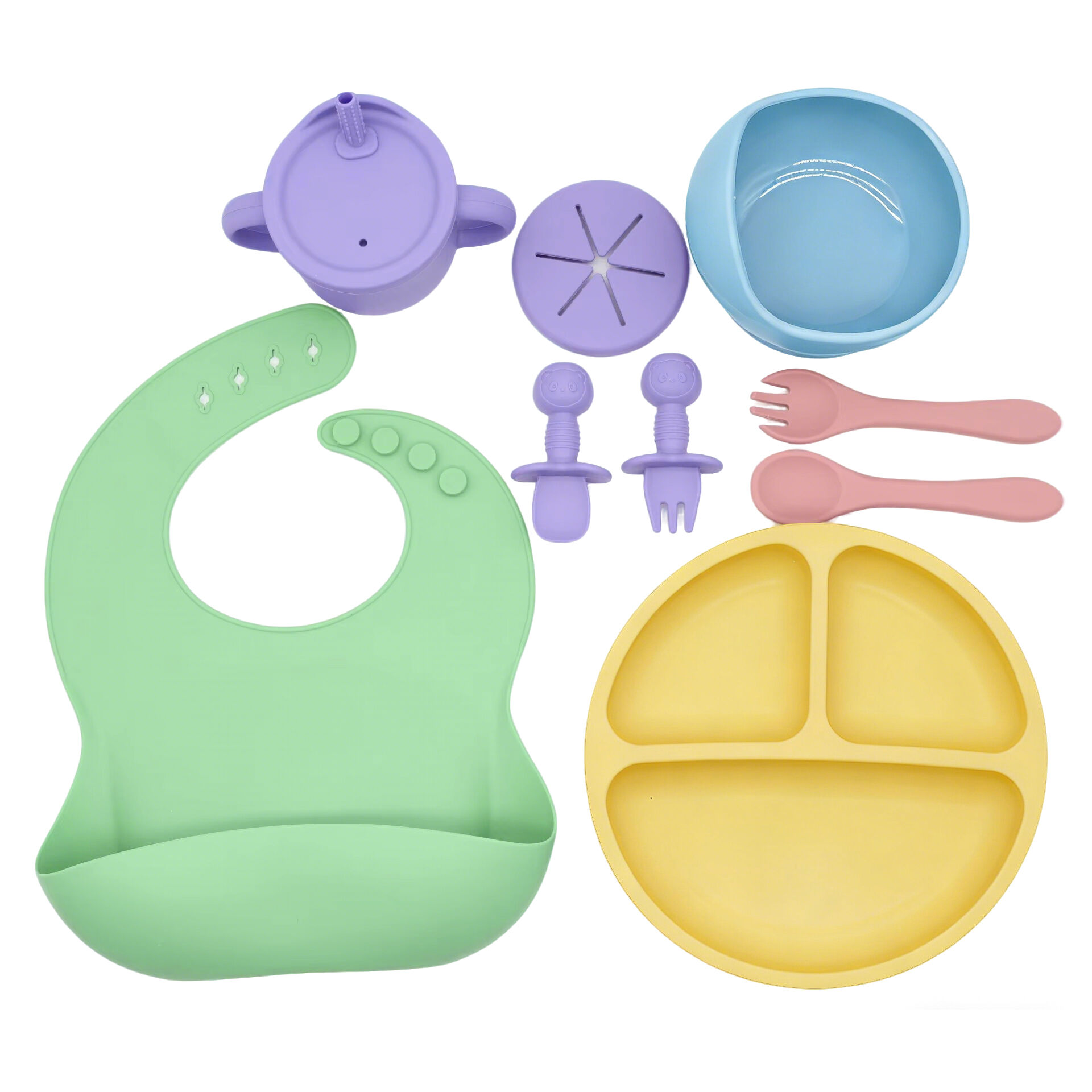
The global market for baby products demands rigorous safety standards that manufacturers must meet before their silicone items can cross international borders. Export-ready silicone baby products require comprehensive testing and certification processes that vary significantly across different regions and regulatory frameworks. Understanding these standards is crucial for manufacturers seeking to establish a successful international presence in the competitive baby product industry. Modern parents increasingly prioritize safety and quality when selecting feeding accessories, toys, and care products for their children, making compliance with international safety standards not just a legal requirement but a competitive necessity.
International Safety Certification Requirements
FDA Approval Standards for US Markets
The United States Food and Drug Administration maintains stringent requirements for export-ready silicone baby products entering the American market. All silicone materials must be food-grade certified and free from harmful chemicals such as BPA, phthalates, and lead. The FDA requires comprehensive documentation proving that manufacturing processes meet Good Manufacturing Practice guidelines and that all raw materials comply with federal safety regulations. Testing protocols must demonstrate that products can withstand repeated sterilization cycles without degrading or releasing toxic substances.
Manufacturers must provide detailed chemical composition reports and migration testing results to prove their export-ready silicone baby products meet FDA standards. The approval process typically involves third-party laboratory testing conducted by accredited facilities that can verify compliance with Title 21 of the Code of Federal Regulations. Companies must also maintain detailed batch records and implement quality control systems that ensure consistent product safety across all manufacturing runs.
European CE Marking and EN71 Compliance
European markets require export-ready silicone baby products to carry CE marking, indicating conformity with health, safety, and environmental protection standards. The EN71 toy safety standard specifically addresses mechanical and physical properties, flammability characteristics, and chemical composition limits for products intended for children under 14 years. Silicone baby products must undergo rigorous testing for small parts, sharp edges, and potential choking hazards before receiving certification.
The European Chemicals Agency enforces REACH regulations that restrict thousands of chemical substances in consumer products. Export-ready silicone baby products must comply with these restrictions and provide Safety Data Sheets documenting all chemical components. Manufacturers must also demonstrate compliance with the Toy Safety Directive 2009/48/EC, which establishes specific migration limits for various elements and compounds that could pose health risks to children.
Material Composition and Chemical Safety
Food-Grade Silicone Standards
Premium export-ready silicone baby products utilize platinum-catalyzed silicone materials that offer superior safety profiles compared to peroxide-cured alternatives. These materials must meet strict purity requirements and demonstrate minimal volatile organic compound emissions during normal use conditions. Laboratory testing verifies that the silicone maintains its structural integrity across temperature ranges from freezing to high-heat sterilization without releasing harmful substances.
The quality of food-grade silicone directly impacts the safety and durability of baby products intended for international markets. Manufacturers must source materials from certified suppliers who provide comprehensive certificates of analysis documenting chemical composition and purity levels. Testing protocols evaluate the silicone's resistance to UV degradation, temperature cycling, and chemical exposure to ensure long-term safety performance.
Heavy Metal Testing and Contamination Control
Comprehensive heavy metal testing represents a critical component of safety certification for export-ready silicone baby products. Testing laboratories analyze products for lead, mercury, cadmium, chromium, and other potentially toxic metals that could leach into food or pose ingestion risks. These tests must demonstrate compliance with the strictest international limits, as many countries have different tolerance levels for various contaminants.
Manufacturing facilities must implement contamination control measures throughout the production process to prevent heavy metal contamination. This includes regular testing of raw materials, monitoring of production equipment, and validation of cleaning procedures. Export-ready silicone baby products require documentation proving that contamination prevention systems effectively maintain product purity from raw material receipt through final packaging.
Manufacturing Process Validation
Quality Management System Requirements
Successful production of export-ready silicone baby products requires implementation of comprehensive quality management systems that meet ISO 9001 standards or equivalent frameworks. These systems must document all manufacturing processes, establish clear quality control checkpoints, and maintain detailed records of material traceability throughout production. Regular internal audits and management reviews ensure continuous improvement and compliance maintenance.
Manufacturing facilities must establish validated cleaning procedures for all equipment that contacts export-ready silicone baby products during production. Cross-contamination prevention protocols protect product integrity and ensure that safety certifications remain valid across different product lines. Employee training programs must address safety requirements, handling procedures, and quality control responsibilities specific to baby product manufacturing.
Sterilization and Packaging Protocols
Export-ready silicone baby products must undergo validated sterilization processes that eliminate potential pathogens without compromising material properties. Steam sterilization, gamma radiation, and ethylene oxide treatments each offer different advantages depending on product design and intended use. Manufacturers must validate sterilization effectiveness through biological indicator testing and demonstrate that repeated sterilization cycles do not degrade product safety or performance.
Packaging systems for export-ready silicone baby products must maintain sterility during storage and transportation while providing adequate protection against physical damage. Barrier packaging materials must be compatible with sterilization processes and demonstrate appropriate moisture and oxygen transmission rates. Packaging validation includes accelerated aging studies that simulate long-term storage conditions and confirm package integrity maintenance.
Regional Market Specifications
Asian Pacific Market Requirements
Asian markets impose specific safety standards for export-ready silicone baby products that often exceed baseline international requirements. Japan's Food Sanitation Law establishes strict migration limits for various chemical substances and requires extensive documentation of manufacturing processes. South Korea's K-Mark certification system evaluates product safety through comprehensive testing protocols that address both chemical composition and physical safety characteristics.
China's GB standards for baby products continue evolving to align with international best practices while maintaining unique requirements for domestic market protection. Export-ready silicone baby products entering Chinese markets must comply with specific labeling requirements, chemical composition limits, and testing protocols administered by authorized Chinese testing laboratories. Understanding these regional variations is essential for successful market entry and sustained compliance.
Latin American Compliance Frameworks
Latin American countries implement diverse regulatory frameworks for export-ready silicone baby products, often combining elements from US, European, and regional standards. Brazil's INMETRO certification system requires comprehensive product testing and factory inspections to verify compliance with national safety standards. Mexico's NOM standards establish specific requirements for baby product labeling, chemical composition, and safety testing that manufacturers must address before market entry.
Successful penetration of Latin American markets requires understanding of import documentation requirements, local testing facility recognition, and ongoing compliance monitoring obligations. Many countries require periodic retesting of export-ready silicone baby products to maintain market authorization, making long-term compliance planning essential for sustained market presence.
Testing and Documentation Protocols
Third-Party Laboratory Certification
Independent testing laboratories play a crucial role in verifying that export-ready silicone baby products meet international safety standards. Accredited facilities must demonstrate competence through ISO/IEC 17025 certification and maintain recognition from relevant regulatory authorities in target markets. These laboratories conduct comprehensive testing protocols that evaluate chemical composition, physical safety characteristics, and durability performance under simulated use conditions.
Testing reports from qualified laboratories provide the documentation foundation for regulatory approvals and market access permissions. Export-ready silicone baby products require multiple types of testing including migration studies, mechanical property evaluation, and chemical composition analysis. Manufacturers must work closely with testing laboratories to ensure that test methods align with specific regulatory requirements for each target market.
Ongoing Compliance Monitoring
Maintaining market authorization for export-ready silicone baby products requires ongoing compliance monitoring and periodic retesting to verify continued conformance with safety standards. Many regulatory frameworks mandate annual or biennial retesting of representative product samples to confirm that manufacturing processes continue producing compliant products. Changes to raw materials, manufacturing processes, or product designs may trigger additional testing requirements.
Effective compliance monitoring systems track regulatory changes across all target markets and assess their impact on existing product approvals. Export-ready silicone baby products must adapt to evolving safety standards while maintaining consistent quality and performance characteristics. Proactive monitoring enables manufacturers to address compliance issues before they impact market access or customer confidence.
FAQ
What are the most critical safety tests for silicone baby products?
The most critical safety tests for export-ready silicone baby products include migration testing to verify that no harmful chemicals leach into food or saliva, mechanical testing to ensure products cannot break into dangerous small parts, and chemical composition analysis to confirm absence of prohibited substances like BPA, phthalates, and heavy metals. These tests must be conducted by accredited laboratories using internationally recognized testing methods.
How long does the certification process typically take?
The certification process for export-ready silicone baby products typically requires 6-12 weeks depending on the complexity of testing requirements and the specific markets targeted. Initial chemical composition analysis may take 2-3 weeks, while comprehensive migration testing and mechanical property evaluation can require an additional 4-6 weeks. Expedited testing services are available from some laboratories but may increase certification costs significantly.
Do different countries accept each other's safety certifications?
Most countries maintain independent safety certification requirements for export-ready silicone baby products, though some mutual recognition agreements exist between trading partners. European CE marking is widely accepted across EU member states, while some Asian countries recognize specific US or European certifications with minimal additional testing. However, manufacturers should verify specific recognition policies for each target market rather than assuming universal acceptance.
What happens if safety standards change after product certification?
When safety standards change after initial certification, manufacturers of export-ready silicone baby products must evaluate whether their existing products continue to meet new requirements. In some cases, additional testing may be sufficient to demonstrate continued compliance, while significant standard changes might require product reformulation or redesign. Regulatory authorities typically provide transition periods for existing products, but manufacturers must monitor compliance status continuously and plan for necessary updates.